


New 10% VAT on Holiday Rentals in Spain: What Foreign Property Owners and Buyers Need to Know
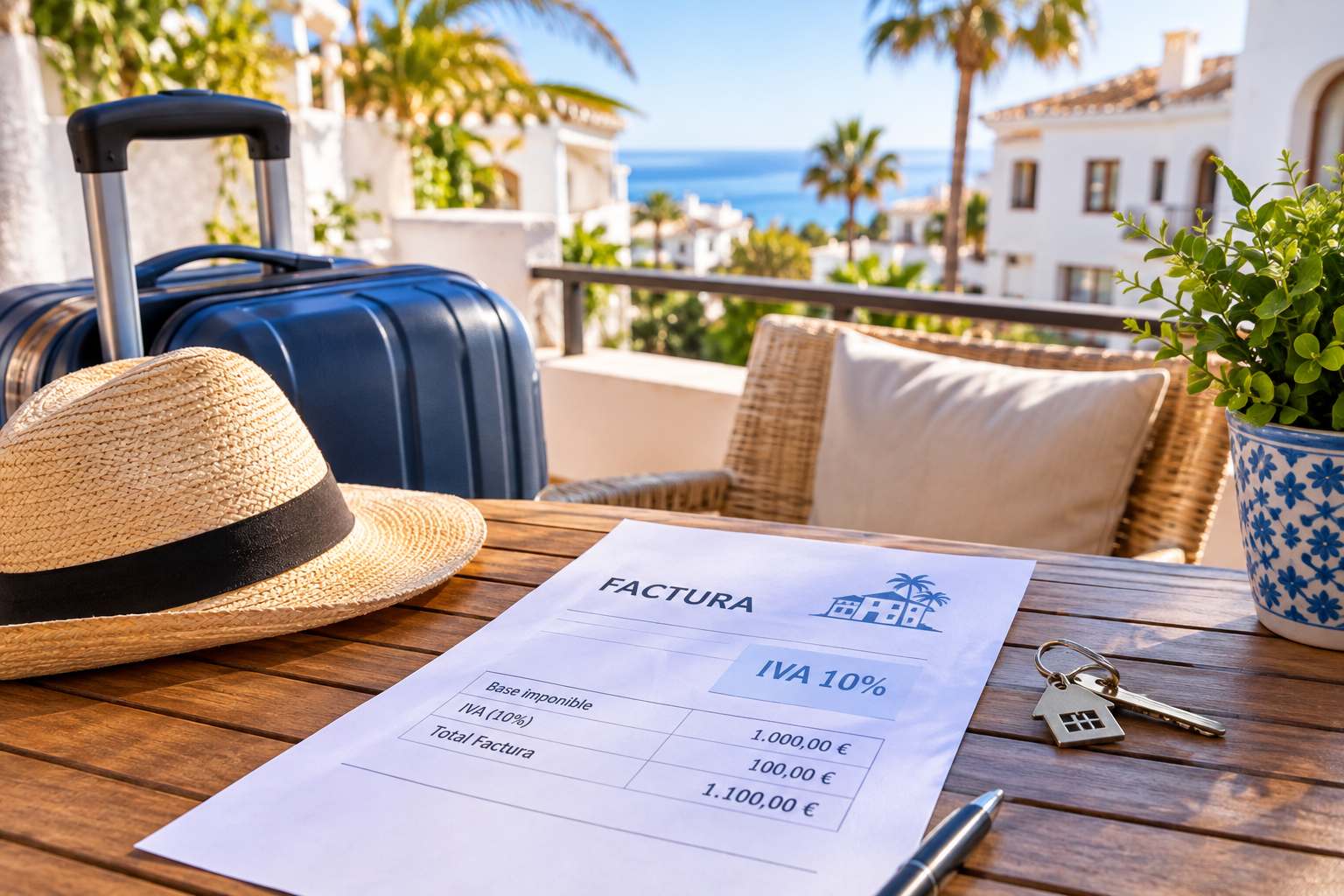 From 1 December 2026, new Spanish VAT rules will affect foreign property owners who rent out their homes to holidaymakers. However, the reform could also create an important tax opportunity for foreign buyers purchasing new-build properties in Spain with the intention of using them for holiday rentals. Royal Decree-Law 29/2026, of 6 October, introduces a 10% VAT charge on qualifying short-term rentals of furnished properties. Until now, holiday rentals without hotel-type services were generally exempt from VAT. Under the new legislation, many owners will have to charge VAT to their guests and submit quarterly VAT returns.
At C&D Solicitors, we consider it important that both existing holiday rental owners and foreign buyers planning to purchase a property for holiday rental investment understand the practical consequences of these changes.
1. NEW 10% VAT OBLIGATIONS FOR HOLIDAY RENTAL PROPERTY OWNERS
Which holiday rentals will be subject to 10% VAT?
From 1 December 2026, rentals of furnished apartments or houses for periods of 30 nights or less to the same tenant will generally be subject to 10% VAT, even when no hotel-type services are provided.
However, there are important exceptions:
- Rentals exceeding 30 nights: these remain exempt from VAT when no hotel-type services are provided.
- Rentals exceeding 30 nights with hotel-type services: these are subject to 10% VAT.
- Rooms rented within the owner’s habitual residence: where the owner genuinely lives in the property, room rentals are exempt from VAT, provided no hotel-type services are supplied.
For example, a foreign owner renting out an apartment in Málaga, Marbella or Nerja for one or two weeks will generally have to charge 10% VAT from 1st December 2026.
What must existing holiday rental owners do under the new VAT rules?
If you are a non-resident owner renting out your Spanish property to holidaymakers, you will generally need to:
- Register or update your rental activity with the Spanish Tax Office (Agencia Tributaria) using Form 036.
- Charge 10% VAT on qualifying holiday rentals from 1st December.
- Issue the required invoices and keep records of VAT charged and deductible expenses.
- Submit quarterly VAT returns using Form 303 (Modelo 303).
- Pay the VAT due after deducting any eligible input VAT.
For example, if the rental price is €1,000 before VAT, the guest will pay €1,100, including €100 VAT. Owners should therefore review their advertised prices, bookings and arrangements with holiday rental platforms.
When must owners submit their first quarterly VAT return?
Owners who carry out holiday rentals subject to the new VAT rules during December 2026 must declare that VAT in January 2027, under the ordinary quarterly VAT system.
The first declaration will cover the fourth quarter of 2026, although the new VAT rules only apply from 1 December. The filing period is from 1 to 30 January 2027. Subsequent quarterly returns are generally submitted in April, July, October and January. Owners should also review the treatment of advance payments and reservations made before the new legislation takes effect.
Do non-resident owners still have to declare rental income through Form 210?
Yes, VAT and Non-Resident Income Tax (IRNR) are two different taxes, and the new VAT obligation does not replace the existing income tax obligation.
VAT must be declared on the Form 303: Owners charge VAT to their guests and declare it quarterly, deducting eligible VAT paid on expenses associated with the rental activity.
Non-Resident Income Tax must be declared on the Form 210: Non-resident owners must continue to declare the rental income they obtain from their Spanish property.
Where the requirements for annual grouped filing are met, rental income obtained during 2026 can be declared through Form 210 in April 2027. Therefore, a foreign owner renting out a holiday property may have two separate tax obligations in Spain: quarterly VAT returns and an annual Non-Resident Income Tax return, where annual grouped filing is applicable.
Can owners deduct VAT paid on holiday rental expenses?
Yes, where the rental activity generates a right to VAT deduction and the relevant legal requirements are met. Eligible expenses may include certain repairs, maintenance, cleaning services, furniture and other costs associated with the rental activity. This means that owners may be able to deduct eligible VAT paid on expenses from the VAT charged to their guests.
2. AN IMPORTANT VAT OPPORTUNITY FOR BUYERS OF NEW-BUILD PROPERTIES IN SPAIN
Can foreign buyers deduct the VAT paid when purchasing a new-build property for holiday rentals?
 Yes, provided the legal requirements are met. This could be one of the most significant opportunities created by the new VAT rules for foreign property investors.
When purchasing a new-build residential property directly from a developer in Spain, buyers generally pay 10% VAT on the purchase price. Previously, owners who rented out their properties without providing hotel-type services generally carried out VAT-exempt activities and could not normally deduct the VAT paid when purchasing the property. Under the new legislation, qualifying short-term holiday rentals are subject to VAT. Consequently, a buyer purchasing a new-build property specifically for this activity may be entitled to deduct the VAT paid on the acquisition.
For example:
| New-build property purchase | Amount |
| Purchase price before VAT | €300,000 |
| VAT on purchase (10%) | €30,000 |
| Total including VAT | €330,000 |
If the property is acquired exclusively for qualifying holiday rental activity and all legal requirements are satisfied, the €30,000 VAT paid on the purchase could potentially be deductible. This is not an automatic refund. The deduction must comply with Spanish VAT legislation and the applicable tax procedures.
What requirements must a buyer meet to deduct VAT on a new-build property?
A foreign individual does not necessarily need to establish a Spanish company to qualify for VAT deductions. However, the following requirements are particularly important:
- The property must be intended for a genuine rental activity subject to VAT and generating a right to deduction.
- The intention to carry out this activity must be supported by objective evidence from the acquisition stage.
- The buyer must comply with the applicable Spanish VAT registration requirements, normally through Form 036.
- The buyer must obtain and retain the appropriate purchase invoices showing the VAT paid.
- The property must be used consistently with the VAT deduction claimed, taking account of any private use or VAT-exempt rentals.
- The buyer must comply with the relevant VAT returns, record-keeping requirements and legal deadlines.
What happens if the buyer also wants to use the property for personal holidays?
Many foreign buyers purchase property in Spain both as an investment and for their own holidays. In these circumstances, the right to deduct VAT may be restricted, depending on the property’s actual business use and the applicable legal requirements. A buyer should not assume that the full VAT paid on the purchase can be recovered if the property will also be used privately.
Why is legal due diligence essential when buying a property for holiday rentals?
Before purchasing a property for holiday rental investment, buyers must verify that the intended activity is legally permitted. In Andalusia, this requires checking the applicable tourism regulations, municipal restrictions and the rules of the Community of Owners. In Andalusia, in order to operate a holiday rental business, the property must be registered with the Andalusian Tourism Register (RTA).
At C&D Solicitors, we carry out comprehensive legal due diligence on properties through our Legal Report, reviewing the relevant legal circumstances of the property before the buyer commits to the purchase. Our legal report allows foreign buyers to understand the legal position of the property, identify potential restrictions affecting its intended holiday rental use and make an informed investment decision with greater legal certainty. All of this must be done before signing the private purchase contract (PPC). The possibility of recovering VAT should always be assessed alongside the legal feasibility of the rental activity.
3. C&D SOLICITORS: PROPERTY LAWYERS IN ANDALUSIAN, MURCIA AND ALICANTE.
For buyers planning to invest in a property in Spain, It is important to investigate whether it is possible to operate a holiday rental business before purchasing. If you are buying a new-build property, it is essential to assess the potential VAT deduction and the legal requirements for holiday lets before purchasing.
Our legal work includes carrying out comprehensive due diligence on the property and development, reviewing the developer’s contractual documentation, checking the Building Licence and planning situation, reviewing the protection of advance payments and bank guarantee arrangements, advising on the Private Purchase Contract and assisting with completion before the Spanish Notary Public.
As part of our legal due diligence service, we prepare a detailed written legal report setting out the legal status of the property and development together with the relevant findings of our investigation. Where possible, this report is provided before you sign the Private Purchase Contract and before substantial payments are made to the developer, so that you can make an informed decision before becoming legally committed to the purchase.
We provide a full legal service throughout the purchase process and can assist you in English, Dutch, Swedish, German, French and Arabic.
Telephone: 0034 952 532 582
WhatsApp: 0034 639 54 16 02
Email: info@cdsolicitors.com
We can review your circumstances, explain the legal process and provide you with information about our services and costs without obligation.
C&D Solicitors advises foreign property owners and buyers on Spanish property transactions, holiday rental regulations and the related legal and tax obligations.
Author: Gustavo Calero Monereo, lawyer at C&D Solicitors, Property Law and Conveyancing, Torrox & Málaga, Andalusia, Spain

