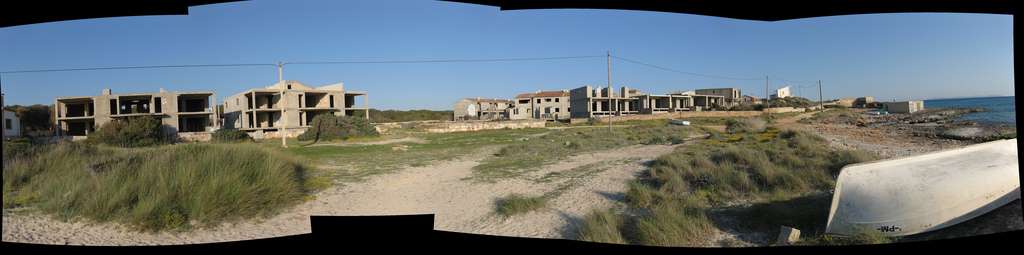
OBTAINING THE LICENCE OF FIRST OCCUPATION

OBTAINING THE LICENCE OF FIRST OCCUPATION

Importance Licence First Ocupation LFO

We have recently known, through our clients’ consultations, of the situation that most of the owners of La Axarquía area suffer, which comes from the lack of a License of First Occupation on their properties, particularly, regarding those problems with contract the supplies, such as the electricity supply for their first time or for its restoration, after being cut off by the electricity company (i.e. end of construction site temporary power).

The License of First Occupation is a certificate issued by the town hall that confirms that a newly-built property fully complies with all planning and building regulations, and is ready to be used as a dwelling. It also confirms the compliance with all Health, Safety, Planning and Construction laws, and that the property has been fully completed, with no outstanding works. Each newly built dwelling will have an individual License of First Occupation. License of First Occupation only applies to newly-built properties as the L.F.O. is the original authorization to use them as a dwelling.

Granting a License of First Occupation certifies that the developer has built the dwelling fully complying with the original Town Hall’s Building License, as well as complying with all Planning laws.

The first occupation licence wasn’t required before 1978, this means all the properties with more than 37 years won’t have it.

The License of First Occupation is required to have access to the official supplies (water, electricity, gas,…).

The Spanish law requires the granting of the License of First Occupation to set up any utility contract for the property. Nevertheless, the most of the properties  without the first occupation licence have electricity supply and water supply. Many of these properties haven’t a first occupation licence due to the works in the urbanization aren’t finished yet but the owners are living there. We can say that in many cases the real situation of these properties haven’t anything to do with the content of the law.

It is always advisable to complete the purchase with a valid License of First Occupation (LFO) in place, even if it is not illegal to complete at the Notary office without a License of First Occupation. In other words, the property purchase completion before a Spanish Notary public without a LFO is legal in Spain, and the property can be lodged under your name at the Land Registry records. However, it is not legal to “live” in a property without the License of First Occupation. This is the reason because not having it in the new homes will prevent you from having access to water and electricity supplies for the property in order to get them connected.

Properties without LFO can be bought, sold and registered at the Land Registry. So it is not illegal to sell a property without LFO. If you own a newly-built property that was not issued with the License of First Occupation you might have trouble selling it as the potential buyers may seek for a steep discount because of this matter.

The information concerning the LFO given in this post may have to be understood as a benchmark to all those new built properties according to a building license previously obtained and complying with all Planning laws. If this building license was not given, if it was not according with Planning laws, or, in the event that the works carried out did not adhere to the building plan, we will be in another different situation, and the way to get access to these supplies would be different as well. But this is an issue which will be analyzed in a further post, taking into consideration the new measures introduced by the called new “Decree of legalization”, approved by the Andalusian Parliament last 10th of January, in this sense, which is not in force yet.


Author: Francisco Delgado Montilla, C&D Solicitors (lawyers)
Torrox-Costa (Malaga/Costa del Sol/Andalucia)

 

ADVICES FOR OWNERS OF NON-REGISTERED HOMES IN THE LAND REGISTRY

ADVICES FOR OWNERS OF NON-REGISTERED HOMES IN THE LAND REGISTRY

New building declaration and Land Registry records

The possibility of registration in the Land Registry of constructions without building permits after four years of completion, is provided by a State regulation – Spanish Royal Decree Real Decreto 1093/1997 of 7th of July, Section 52 provides this possibility, as well as the following requirements for this registration: 1) proceedings of town planning discipline shall not appear in the Land Registry against the construction; 2) the time fixed by law shall have been elapsed in order to “tackle” this infraction through the administrative procedure and 3) certification of the year of completion of the construction.

Thanks to the above mentioned Section of the Royal Decree, thousands of constructions have been registered in the Land Registry, although they did not have the building permits or the constructions did not comply with the conditions of the building permits.

This Section has not been modified and is still in force, however some elements has been incorporated to increase the requirements demanded by the Land Registry offices and to “toughen” the requirements for the admission of this registration, as for example:

1) Amendment of Section 20.4 of the Spanish Land Law which refers to the declarations of new buildings and incorporates a new requirement for its registration in the Land Registry—the submission of a certificate from the city council stating the fuera de ordenación (out of ordination) condition for this construction.

2) As a result of the approval of the new regulation Reglamento de Disciplina Urbanística (town planning discipline regulation) by the Junta de Andalucía Regional Government in May 2010, pressure and control have been increased above these constructions located in non-developable (non-urbanizable) lands. The Junta de Andalucía have notified the Directorate General for Registries and Public Notaries, so that they demand new obligations for the registration of declarations of new buildings, as for example, the submission of a certificate from the city council, so that the Registry record the “fuera de ordenación” condition (out of ordination) or the “asimilado a fuera de ordination” condition (assimilated to out of ordination).

3) Some Land Registry offices have begun to demand the submission of this certificate from the city council as an essential requirement for the registration of the declarations of new buildings.


What do all these changes mean for owners who want to register their home?

In the event that in the future the Land Registry requires owners the submission of this certificate from the city council to register their home, swimming-pool, garage or any other construction in their property, these below may be the consequences:

1) Increase of the economic costs for the declaration of the new building, because some city councils are approving ordinances for the payment of fees for obtaining it, as they need financial resources; in some cases, these costs may range between EUR 2,000-5,000, depending on the square meters of the property.

2) As any other application to city councils, this procedure would be slow and may imply several months until obtaining the certificate; in case owners need to obtain the declaration of new building urgently because of a sale, this period of time may become an important handicap.

3) The fact of recording in the Land Registry the fuera de ordenación” (out of ordination) condition or asimilado a fuera de ordenación” (assimilated to out of ordination) condition on their property, implies the documentary evidence of some limitations, which may affect the sale price when transferring the property to a prospective buyer. It is also worth mentioning that the prospective buyer may demand a discount in a possible transaction regarding this fact.

To sum up, in the event that the Registry offices toughen in the future the requirements to register any construction in the Land Registry and the resulting increase of the costs and period of time for the procedure completion, we advise you to take advantage of the current situation and execute the Public Deed of Declaration of New Building of your home as soon as possible and submit it to the Land Registry to avoid any problem in the future.


Author: Francisco Delgado Montilla, C&D Solicitors (lawyers)
Torrox-Costa (Malaga/Costa del Sol/Andalucia)


Differences between the Golden Visa and the non-lucrative visa

LEGAL COUNSELING: “IF YOU BUY CHEAPLY, YOU PAY DEARLY”

Legal investigation by professional

Some months ago, a foreign prospect client, who we have come to know as “Mr. X”, came in our offices. He requested some information regarding sale procedures, legal work and our professional fees.

After the first free appointment, in all honesty he commented to us that he had contacted a professional offering a 40% cheaper fee than ours. However, he would be interested in contracting our services provided that we could offer him a discount.

At that moment, we considered which option to adopt; naturally, we wanted to win this client, but we also knew that the rural property, which he wanted to buy, required a quite complex searching process.

At the end, Mr. X was offered a “courtesy” discount in our fees, which was not close to the low price offered by the former professional. Finally, Mr. X decided to contract the other professional’s cheaper services.

Regarding the current market and low circulation of clients, some solicitors offer great discounts to stand out from competitors and then win a client. Then, considering the aforesaid, why our legal firm did not offer a higher discount to win Mr. X as a client?

The answer is obvious; because such low fees proposed by Mr. X could not pay for the time of commitment for the searching process to buy the above mentioned property in a rural land and then providing full legal certainty to the client.

Within our professional environment of legal services, you may and shall be flexible and capable for adapting to win a client, considering the current situation of financial difficulties and increase of competitors in our sector. However, you should NEVER compete with lower fees, because if the fees for your services are reduced so much, then the quality of your services becomes also poorer.

Furthermore, if we are realistic, no professional may work with the same intensity neither commit the same time when their fees are so low, because production costs and ideal profits would require much more cases which may not be properly and professionally handled, and as a result, a poorer quality counseling service may be provided.

Later on, we knew that Mr. X hired an agent’s services for the legal counseling instead of a solicitor’s. We do not know how his case finished or whether he received a good counseling service. Similarly, if I do not feel physically well or fell pain, I would contact a doctor for a diagnosis and the prescription of a solution, instead of contacting a person who is not a doctor and claims to know a lot about medicine. As a qualified general practitioner, the doctor is better trained and has a legal responsibility. As a result, the patient-client receives more security and reliability, although he or she may pay more for these services.

In all honesty, an agent will never provide the same legal service as a solicitor will, because a solicitor has been exclusively trained by and for law. Solicitors’ training is eminently juridical; this full time commitment and the responsibility of the practice of law—because of the rules and the professional ethics code and good practice; shall always result in a higher quality legal counseling and greater commitment to the client. But I do not go against agents, as I personally know some of them and I am aware of their worth. However, they are not solicitors.

In short, although we were really looking forward to winning Mr. X as a client, we could not afford to reduce our fees so much in order to avoid a poorer quality service. The fact of highlighting our professionalism and tailor-made customer service in our law firm implies a commitment of time and this commitment implies some costs that the client should pay.


Author: Gustavo Calero Monereo, C&D Solicitors (lawyers)
Torrox-Costa (Malaga/Costa del Sol/Andalucia)

 

OCEAN VIEW PROPERTY, PROBABLY ANOTHER CASE OF PROPERTY FRAUD IN MALAGA

OCEAN VIEW PROPERTY, PROBABLY ANOTHER CASE OF PROPERTY FRAUD IN MALAGA

Property fraud Andalucia Spain

Last Monday, the 13th of December, I read an    article in the newspaper EL MUNDO in which they inform that about a hundred people from Northern Ireland were victims of a property fraud through the Ocean View Properties agency. It was supposed that the development company would build a housing estate in a plot located in Estepona (Malaga). Apparently fraud people made important payments on account of the purchase price in 2005 and 2006 for their future homes in Spain.

Concerning these off-plan property sales, directly from the developer (new property), apart from confirming whether the developer that sells is the owner of the buildable plot, and the relevant Town Hall has approved the urbanization project of this land, the buyer should request the immediate handing of the bank guarantee along with the interim payments that the buyer are going to carry, guaranteeing every payment for the building process until the granting of the purchase title deed. In this way, if the urbanization project may not be completed because of an administrative cause, because of the insolvency of the developer or any other cause non attributable to the buyer, then he can get back every payment made by enforcing this bank guarantee.

In this case, it is obvious that buyers and their solicitors did not require these bank guarantees to the developer. Now, the buyers should associate each other to force in the judicial proceedings, relying on a competent legal team that may advice them properly. It is essential to bring a lawsuit against them (civil action) or criminal charges (criminal action depending on whether it is considered a fraud or not) expeditiously so to call for the preventive seizure of all the goods that the developer may have, and all the administrators’ goods in any country, to study if the administrators have other companies opened so to attack all these goods.

When trying to get back money, the judicial proceedings is very long, so fraudsters or possible insolvents can hide or squander their patrimony and the trail of the money would be lost. The result of it may not guarantee the success.

Conclusion, if you are going to buy off-plan directly from the developer, make sure of who is the owner of the plot, of the urbanization project, and, specially, do not pay anything without receiving the corresponding bank guarantees for these interim payment until the granting of the purchase title deed. If you have signed a purchase private contract with a developer and you have not still the bank guarantees, it is time to require them, because the financial situation of the developer is complicated and, in short, you never know. Our advice is, if in doubt, you consult a solicitor in order him to analyze your situation.


Author: Gustavo Calero Monereo, C&D Solicitors (lawyers)
Torrox-Costa (Malaga/Costa del Sol/Andalucia)


Terms and conditions
Newsletter
C&D Solicitors Malaga, Spain
Colegio de Abogados de Mälaga
C&D Solicitors
Privacy Overview

This website uses cookies so that we can provide you with the best user experience possible. Cookie information is stored in your browser and performs functions such as recognising you when you return to our website and helping our team to understand which sections of the website you find most interesting and useful.